 John

As a writer, I am excited to delve into the fascinating world of fiber optic coupling. This technology plays a crucial role in enhancing communication systems by enabling efficient transmission of data through optical fibers.
The Importance of Fiber Optic Coupling
Fiber optic coupling is essential for connecting optical fibers and ensuring optimal signal transfer. By using specialized connectors, it allows for seamless integration between different components of fiber optic systems, such as transmitters, receivers, and amplifiers.
This coupling technique enables high-speed data transmission over long distances with minimal loss or interference. It has revolutionized various industries that heavily rely on reliable and fast communication networks, including telecommunications, internet services, healthcare, and aerospace.
The Role of PM Components
In the realm of fiber optics, polarization-maintaining (PM) components are vital for maintaining signal integrity. These components help control the polarization state of light within an optical system.
By utilizing PM couplers and splitters in conjunction with fiber optic cables, engineers can ensure that transmitted signals remain stable throughout their journey. This is particularly important in applications where precise alignment and polarization control are critical factors for accurate data transmission.
Optizone Technology: Advancing Fiber Optic Coupling
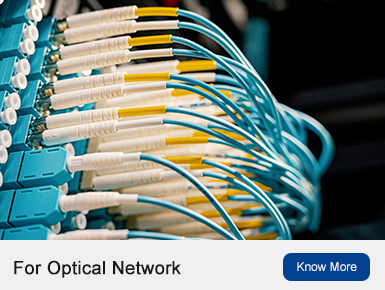
One notable advancement in fiber optic coupling is the development of Optizone Technology. This innovative approach optimizes the performance of couplers by reducing insertion losses while maintaining excellent return loss characteristics.
Optizone Technology achieves this by carefully designing the geometry and refractive index profile within the coupler structure. The result is improved power distribution across multiple output ports without compromising overall system efficiency.
This breakthrough not only enhances signal quality but also reduces costs associated with additional amplification or signal regeneration. It has found applications in high-speed data transmission, fiber optic sensing, and optical network systems.
Conclusion
Fiber optic coupling is a critical component of modern communication technology. Through efficient connection of optical fibers, it enables seamless data transmission over long distances with minimal loss or interference.
The integration of pm components ensures stable signal integrity, while advancements like Optizone Technology further enhance the performance and efficiency of fiber optic couplers.
As we continue to rely on fast and reliable communication networks for various industries and everyday life, the importance of fiber optic coupling cannot be overstated. Its ongoing development will undoubtedly contribute to future technological advancements in this field.

 SEO
 Baniza