Introduction: Why Stairwell Lighting Decisions Carry Outsized Risk
Here’s a simple truth: the stairwell is both a code corridor and a brand statement. For any chandelier supply company, the stairwell is where small mistakes get expensive. Picture a retrofit in a mid-rise—tight runs, awkward access, and long drops. Recent audits show that over one-third of stairwells miss basic lighting uniformity targets, while budget creep often comes from rework on mounting and controls. So, how do you select fixtures that meet safety, fit the volume, and still look refined (without turning maintenance into a rope-and-rig nightmare)?
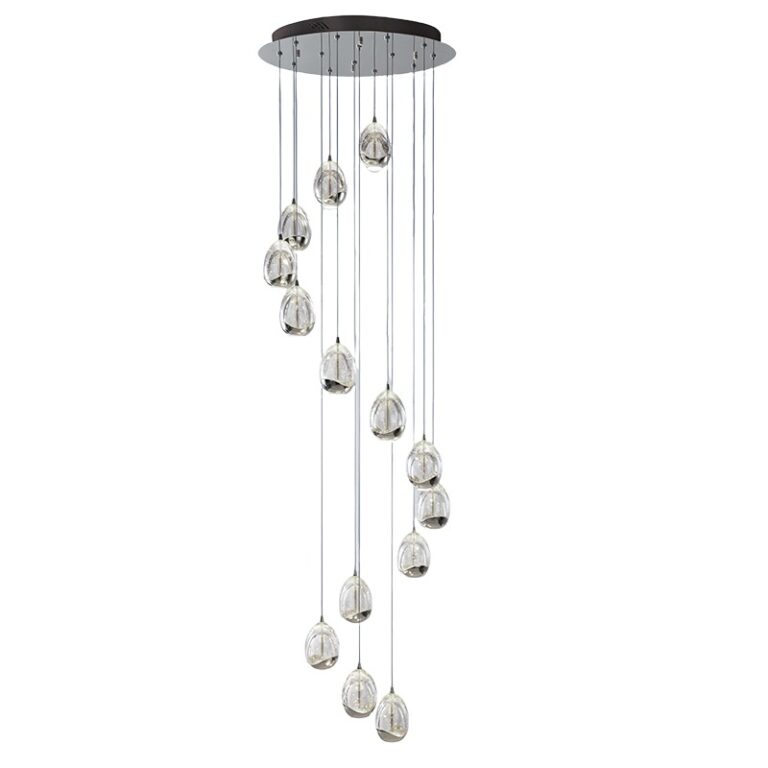
In this article, we compare what matters: scale, light quality, controls, install time, and long-term service. We’ll map how technical choices—drivers, power converters, and structural anchors—change outcomes. Then we’ll ask a better question: which chandelier spec protects both your schedule and your brand promise? Let’s move from guesswork to clear comparisons, one decision at a time.
Deeper Layer: The Hidden Costs Behind “Pretty” Stairwell Fixtures
What’s the real bottleneck?
Most legacy picks look fine on a mood board, yet fail in real shafts. The core issue? Mismatch between volume and photometrics. With modern chandeliers for stairwell, the conversation shifts from looks-first to lumen-first, because vertical circulation needs even spread, not just sparkle. Traditional solutions often rely on a single, heavy pendant with a broad shade. That creates glare at landings and dark steps between floors. Add in clunky power converters, non-dimmable drivers, and you get flicker or poor turndown with sensors—yes, even in tight cores. Maintenance is another trap. A tall drop means lift rentals, coordination, and delays. One lamp out becomes a week of emails. Look, it’s simpler than you think: specify modular LED engines, quick-disconnect harnesses, and a ceiling canopy with service access. Pair it with a basic photometric plan so you verify uniformity before you buy. Small details—UL/ETL listing, strain relief, anchor load calculation—stop surprise costs later. When you treat the stairwell as a system, not a stage, the “pretty” choice becomes the practical choice, too—funny how that works, right?
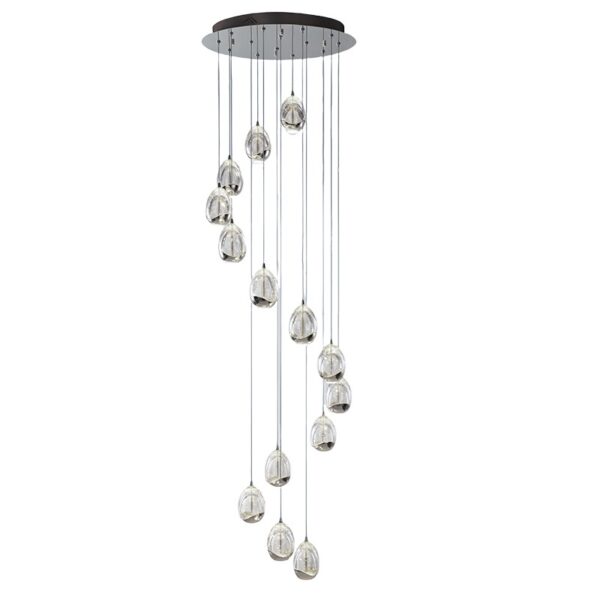
Comparative Lens: How Next-Gen Stairwell Chandeliers Outperform Classic Pendants
What’s Next
The old path used a single center drop and a dimmer on the wall. The new path blends layered optics, control logic, and lighter structures. Here’s the principle: distribute lumens along the vertical run, then tune with sensor-driven dimming. Dimmable drivers now speak 0–10V, DALI, and Bluetooth Mesh. Some systems even use edge computing nodes to manage profiles per landing. That means lower glare, better egress compliance, and less waste. If your lobby adjoins the stair, a coordinated piece—like a scaled large foyer pendant light—can mirror materials and color temperature for a cohesive path. Meanwhile, modular suspension kits cut install time: fewer lift hours, fewer anchors, safer loads. And if you spec high-CRI LEDs with tight binning, your finishes read true from lobby to top floor. This is not theory—it’s practical design translated into fewer RFIs and smoother commissioning.
So, what should you measure when you choose? First, verify vertical foot-candle uniformity across steps, not just at the landing. Second, confirm driver and controls compatibility (0–10V or DALI) with your sensors and BMS, plus standby levels for energy codes. Third, check serviceability: quick-connects, accessible canopy hardware, and documented load paths. These three metrics reduce callbacks and keep safety front and center. In short, compare by outcomes, not catalogs—and your stairwell will work on day one and day 1,000. For deeper specs and coordinated packages, see kinglong.